
How to Sell Industrial Equipment in a Crisis
21 Mar 2025How does a sale come about in the industrial B2B sector? Why must a salesperson become an industry expert in order to persuade a buyer to part with money in times of crisis?
A sale in the B2B segment is driven by two factors.
1. The need to renew fixed assets
The customer needs to expand, renew or completely replace fixed assets because the equipment is obsolete or physically worn out. In simple terms, their old machine has started breaking down often and causing a lot of headaches, and those headaches outweigh the reluctant wish to keep working a bit longer on equipment that needs repair from time to time.
Such decisions arise especially often after "unexpected" breakdowns, when the equipment fails in the middle of the season or during an important order, and even more often at a time when the owner already has enough other problems, and the mood (yes, we will talk about the emotional component) is to replace the equipment after all, although this decision is not always economically justified.
We will not go deep into the nuances of the types of equipment obsolescence, but briefly, two main causes can be singled out:
- Improvement of production technology. For example, you used to buy a flower pot weighing 150 grams with a unit cost of 5 rubles, and then a new machine appeared that produces a pot with the same characteristics but weighing 100 grams, at a unit cost of 3.3 rubles.
- Physical wear – this is when the financial, human and time costs of repairing a machine are equal to or exceed the cost of buying a new one, taking into account downtime and the further useful service life of the equipment.
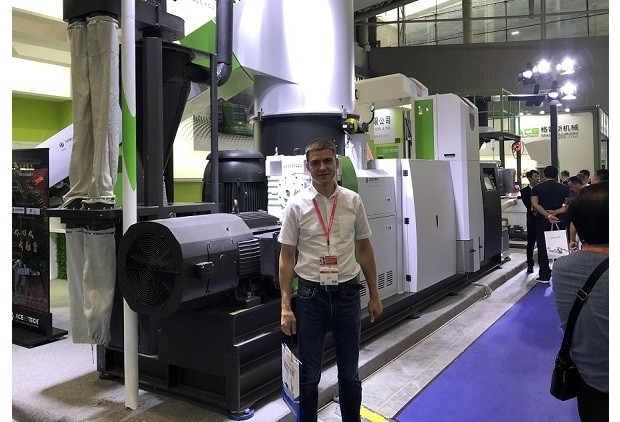
Ilya Fayazovich Khabibulin
General Director, Plastic Expert LLC
How the Salesperson Should Behave
It is important that the salesperson is always "close" to the buyer: writes to them on WhatsApp and calls from time to time to find out how that wonderful machine that keeps breaking down is doing. If the salesperson does this, there is a good chance of closing the deal. In this situation the time factor is very important – to conclude the contract and select the configuration quickly. The salesperson must be ready to pull that very offer out of their sleeve at any moment, because they have been in contact with the buyer and know their situation well.
This type of sale is relatively simple, because the customer has a real need for the product and does not need to be convinced of the necessity of buying.
The work must be built around arguments in favor of your product specifically, not the competitor's, so in negotiations such options play an important role as: delivery times, price and payment terms, warranty and its conditions (for the whole product or specific units, who pays for visits and deliveries, whether the warranty is extended for the period of repair or replacement), post-warranty service, additional free features or services (a personal manager, a discount on consumables, detailed operating instructions).
2. A genuine sale: the customer never thought they needed your product
The second type is a genuine sale. Its essence is that when the salesperson calls the customer, the latter never thought they needed this product. But after several calls, the customer is already actively talking with partners and friends, presenting the salesperson's idea to them.
One of the important foundations of such a sale is the salesperson's own confidence in the product. This confidence must not be blind, otherwise they will make few sales, but must be grounded in facts and knowledge of the market, so that the salesperson can explain with real figures what benefits the product will bring the customer.
When discussing and justifying an equipment purchase, you can rely on:
- Market development – launching a new product.
- Reducing the unit cost of current production. For example, through a faster machine speed or low energy consumption, as well as a reduction in operating staff.
- The standard pressure of competitors. For example, "your main competitor was already planning to buy an updated machine from a German manufacturer".
The main motivator for the buyer, as always, is preserving and increasing money. In light of recent events this is even more relevant, and now is the time for active salespeople to interest buyers who still have money but did not want to spend it, rejecting salespeople's offers and citing crisis times. On the contrary, using their own arguments, one should insist that standing still may bring more negative effect than the expected positive one.
Expert Salespeople
Specialized salespeople are able to convey the market situation to the buyer, explain which trends are currently in play and which products are in demand, and also help the buyer climb out of their everyday business routine. This is relevant when a company rarely attends industry events and does not interact with the media or similar businesses in neighboring regions. In that case the salesperson is of particular interest to the buyer, because they share trends and the latest industry news, which is an important part of a quality sale.
In the end, we come to the conclusion that a salesperson must be an expert and, first of all, understand the customer's business well, along with industry trends, and understand the customer's problems. This is not so hard to do. It is enough to keep in touch with companies with similar business models from different regions, follow industry magazines, both local and foreign, and stay in touch with the manufacturers of the goods supplied.
How to Use This in a Crisis
Given the quarantine and crisis events, when the currency is setting records and everyone is waiting for another round of restrictive measures, the second type of sale is especially relevant, and the salesperson should influence the buyer in a moderately positive way, gradually creating a new need. Most likely, in the next year to year and a half no active development is expected in many industries, so the salesperson must build a sales plan taking into account possible new products that they can offer customers, and start acting immediately in order to keep or even increase their earnings.
I. F. Khabibulin


