
How to Choose a Drawstring Bag-Making Machine: Manufacturer Overview and Practical Advice
9 Oct 2026
A guide for those choosing equipment for making garbage bags with drawstring tapes: a short overview of the product and a more detailed look at manufacturers from Spain, Germany, Italy, Taiwan, Turkey and China.
What a drawstring bag is and why you need such a machine
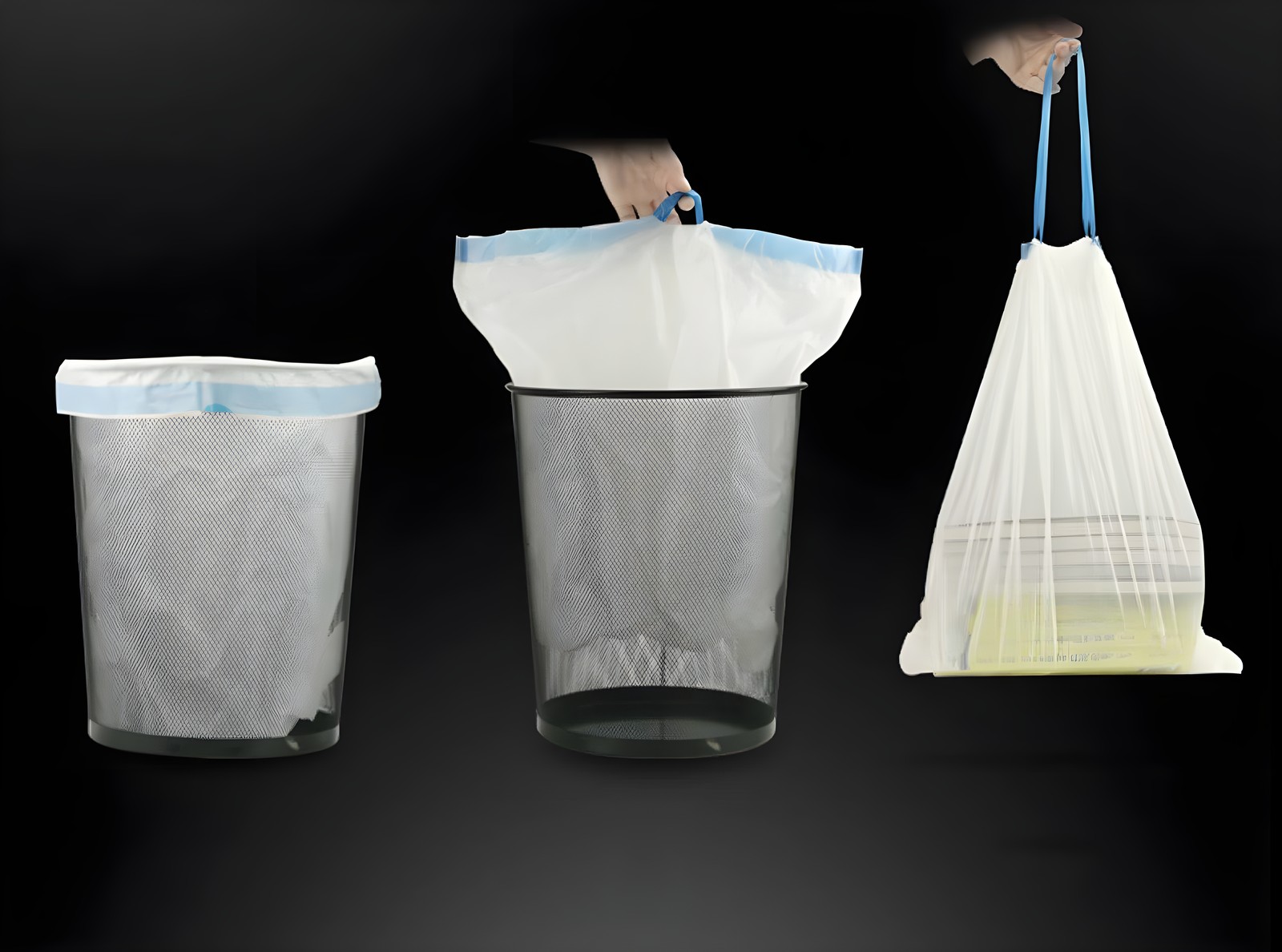
A drawstring bag machine produces not an ordinary garbage bag but a bag with drawstring tapes. The user simply pulls the tapes and the bag closes effortlessly, with no need to tie a knot by hand. When well made, the tapes do not tear, whereas an ordinary bag often tears when pulled by the edges, which is inconvenient.
The thickness, strength, width and material of the bags are selected based on end-user feedback. Feedback travels along the chain “buyer — store — supplier — bag manufacturer”, and product parameters are adjusted to the market. This is why the requirements for machines producing such bags keep growing.
Spain: Coemter
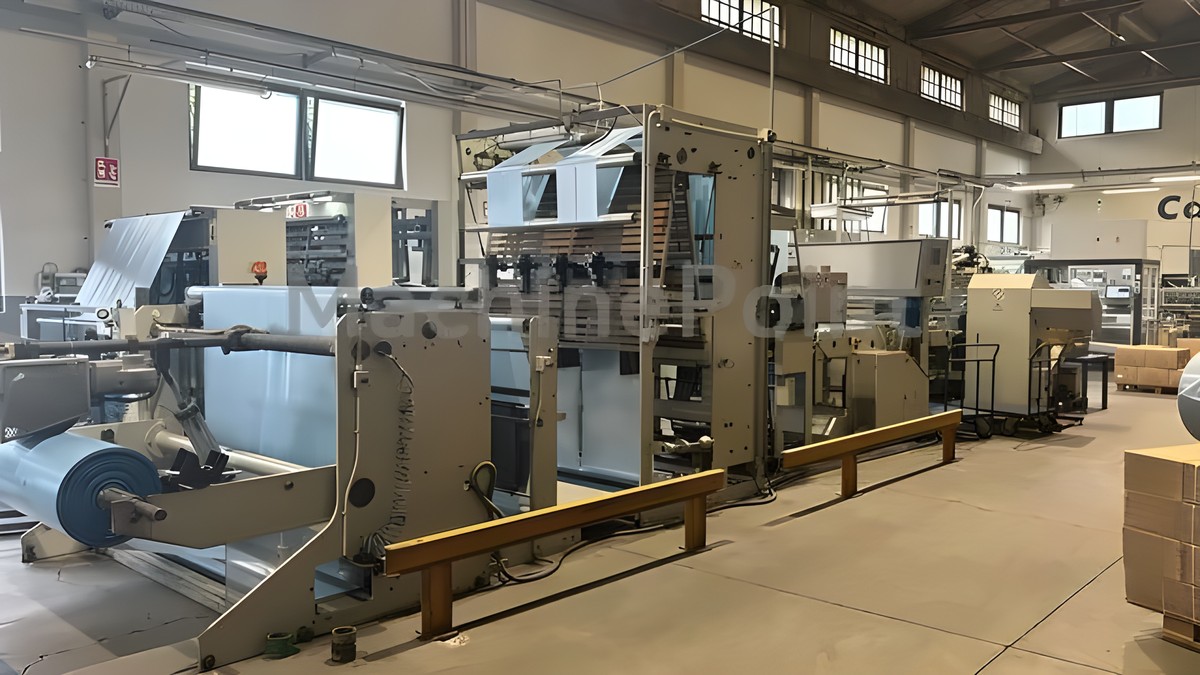
The leading manufacturer of drawstring bag equipment was originally the Spanish company Coemter from the city of Girona, not far from Barcelona. In 1967 COMEXI, a manufacturer of flexographic machines, created a separate company, Coemter S.A., which has been developing, upgrading and selling bag machines ever since.
The plant's key advantage is its own garbage bag production, where a new model undergoes full testing before being handed over to the customer. The plant combines three operations: manufacturing new equipment, renovating used equipment and a bag-production factory.
Coemter machines operate all over the world; one of the best-known models is the Ter roll 900, a machine for the simplest bag on a roll, without a drawstring. The equipment's service life is around 30 years. The flip side of the quality and European costs is high prices.
Comparison of equipment from different countries
| Parameter | Coemter (Spain) | LEMO (Germany) | FAS (Italy) | China | Taiwan | Turkey |
|---|---|---|---|---|---|---|
| Operating speed | 200 m/min | Up to 350 bags | High | 50–140 bags/min | 165 m/min | Up to 300 pcs/min |
| Equipment cost | High | High | High | Below average, 3,918,945 RUB | Average | Above average |
| Film thickness | 260 µm | 35–120 µm | 200 µm | 10–40 µm | — | 10–130 µm |
| Film quality requirements | Excellent adaptability to different types of materials, maximum sealing | V-folding stations, handle die-cutting devices, glue-based reinforcement systems | The welding system ensures an especially strong seam on thick films made from recycled material | Paper with water-soluble glue, automatic changeover of drawstring rolls | Uniform thickness, seam strength under tension, no deformation when heated, no odor | Ideal cutting accuracy, strong sealing |
| Useful service life | 30 years | More than 15 years | 15–20 years | 7 years | 10–15 years | More than 10 years |
| Service | Costs are lower than for LEMO and FAS | High costs: service only through the manufacturer | High service costs | The plant must be chosen carefully and a spare parts kit purchased | Depends on the specific manufacturer or seller | Due to high inflation, service costs keep rising |
| Drawstring machine model | COEMTER Ter Beta Zeta 120120 E 2CE | Lemo Intermat | FAS Converting | OJC-800 | Model HM-1000 MSR + IL | Model DRM-ROLL9001 |
| Advantages | Minimal electronics, the machine is as simple as possible | Maximum speed and automation (German quality) | Modularity: the machine is assembled like a construction set from different units | Low price | Quality components | Special terms, decent quality |
| Disadvantages | High prices | Expensive staff to service the equipment | Expensive equipment | Not distinguished by durability or quality | Long lead time, price higher than China and lower than Europe, possible service difficulties; complex electronics, not all machines are field-proven | High inflation: equipment prices rise while quality stays the same |
Coemter's strategy is to design simple, reliable and high-quality equipment for customers' real needs and to support it throughout its service life. Over time the company has grown into a world leader in machines for making bags from plastic materials.
Germany: LEMO
LEMO machines are equipped with complex electronics and require highly qualified personnel. Service is possible only through the manufacturer, spare parts take a long time to arrive, and service costs are the highest in the segment, followed by FAS and Coemter. In return the buyer gets maximum speed and automation — “German quality” in the full sense.
Italy: FAS
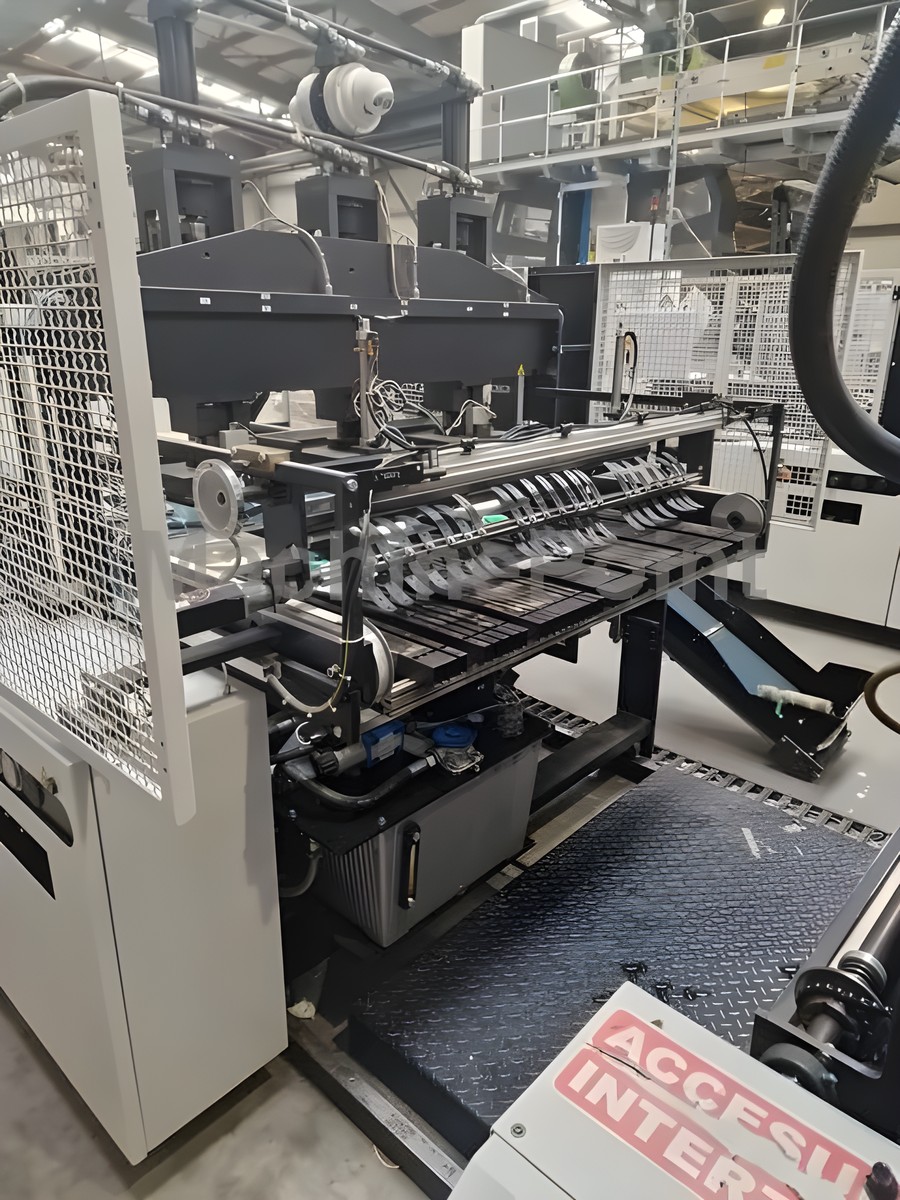
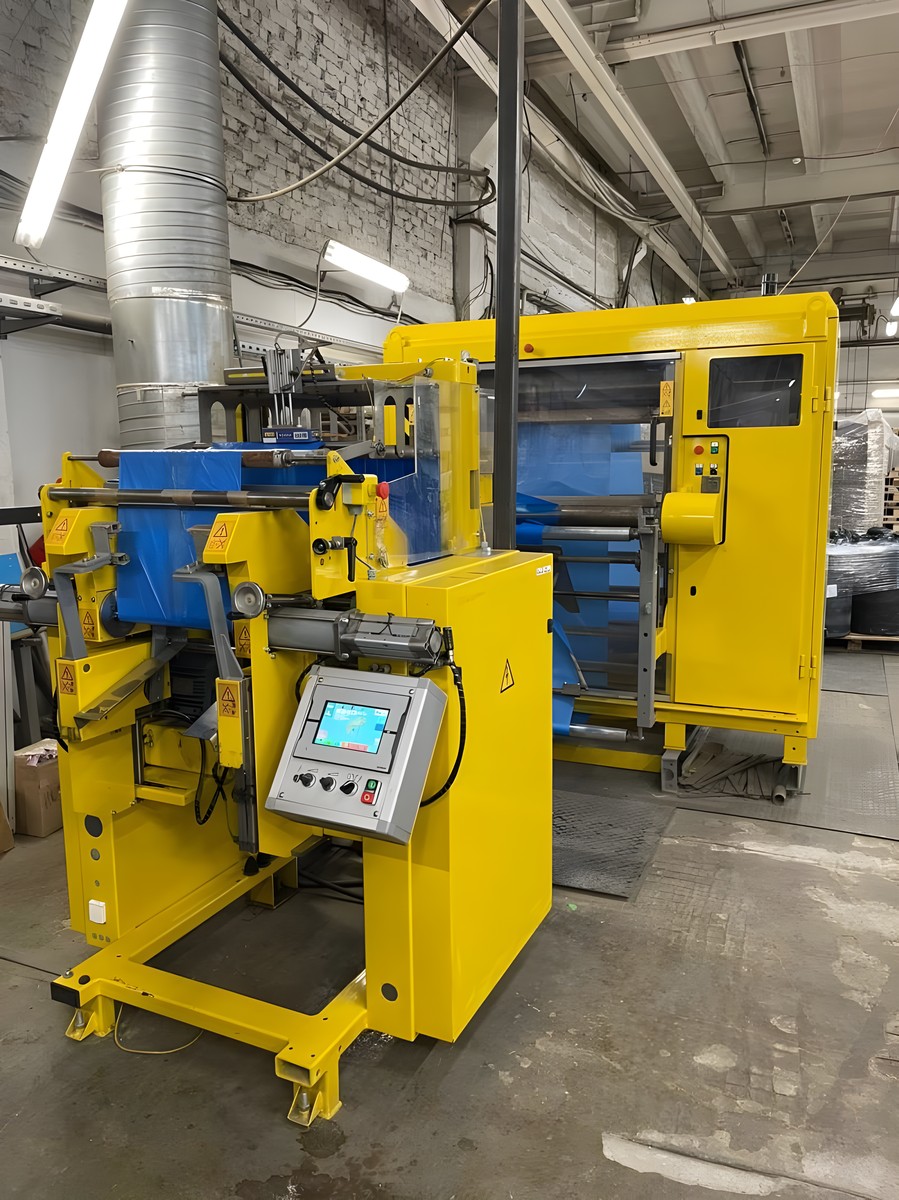
The FAS plant produces bag machines for bags on a roll and specializes precisely in this segment. All machines are assembled in a modular way — like a construction set of separate units, including the sealing block. FAS was the first in the world to introduce a drum sealing system: the knife does not move up and down but follows a closed cycle on a drum. From 2 to 4 knives are installed on the machine, which provides longer contact of the sealing element with the film and a strong seam.
After this system appeared, manufacturers around the world began to copy it, including the Taiwanese HEMINGSTONE, Longmen and DEPO.
Taiwan
After European equipment, products from Taiwan deserve special attention. The island has traditionally produced quality equipment in various industries: European and American metalworking machines are installed, and the inch measurement system is used — a legacy of the Japanese period. Taiwanese companies have learned to copy European machines well and make them attractive thanks to sturdy metal.
The first three Taiwanese manufacturers — DEPO Machinery, HEMINGSTONE Machinery and Longmen — are the market leaders. The second three — Plas Alliance, Parkins and Sunrise — are inferior to them in electronics, speed and service.
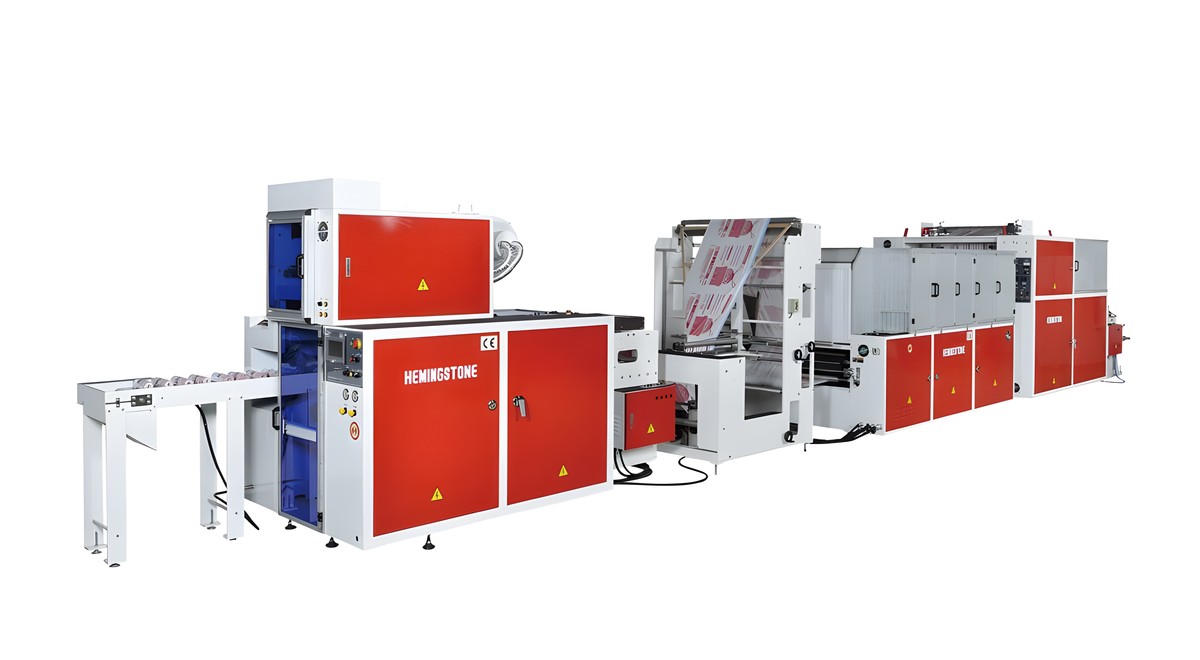
HEMINGSTONE Machinery Co., Ltd. deserves a separate mention — a Taiwanese company founded in 1979. Over more than 40 years the brand has become a symbol of reliability and innovation in the production of bag-making and high-speed flexographic printing machines: HEMINGSTONE is among the top ten world leaders and ranks first in the Asian market.
These conclusions are based on practice: the equipment of all the listed manufacturers has been tested in person — in production, with measurements of actual output from machine logs and conversations with owners. The company COSMO stands out in particular, but it is not highly rated on the world market: high price, complex electronics and in-house technological solutions that are not always optimal.
Taiwanese equipment can be considered and purchased, but with attention to detail: the total weight of the machine, operating speed (in meters per minute), optional equipment and acceptance at the manufacturer's plant. Disadvantages: long lead time, a price higher than Chinese but lower than European, and possible service difficulties. Nuances of individual brands: HEMINGSTONE has expensive repairs, Longmen offers high speed and very expensive machines, COSMO has complex electronics, and some Plas Alliance machines are not field-proven: the machines work, but the actual speed does not always match the declared one.
The niche of drawstring bag machines in our range is covered by the HM-1000 MSR + IL model.
To order a bag machine for producing drawstring bags — as, indeed, any other — it is important to draw up the technical specification correctly: include all the widths, lengths, thicknesses and bag types you plan to produce, as well as your requirements for bag stacking, automatic equipment and packing. The agreed specification is sent to the manufacturer, who prepares a commercial offer. It must immediately state the procedure for acceptance of the equipment at the plant: on which material the test will be carried out and who supplies it.
Turkey
Turkish equipment is represented both by original designs and by copies of older European machines — the same Coemter and FAS. The drawstring bag market in Turkey is represented by only two plants: GUR-ISH and OZ-MAK. These are the two oldest Turkish manufacturers of bag-making equipment.
Gür-iş Makina was founded in 1988: it produces equipment for plastic and paper packaging, including bag-making machines with servo drives and control systems for different types of bags. ÖZ-MAK Plastik Makina has operated since 1998 and is also among the leading manufacturers in the industry.
Turkish machines cost more than Taiwanese ones, while their quality and speed are lower. Turkey has high inflation and, as in Europe, high costs: machine prices rise while quality stays the same. It makes sense to consider Turkey for machines specifically for drawstring bags and in two cases: if the manufacturer offers special terms, or if the buyer is nearby and the plant can provide good service. Turkish equipment is widely represented in Europe and African countries — the quality is generally decent, but a full comparative analysis of speeds and other parameters can turn up better options.
China
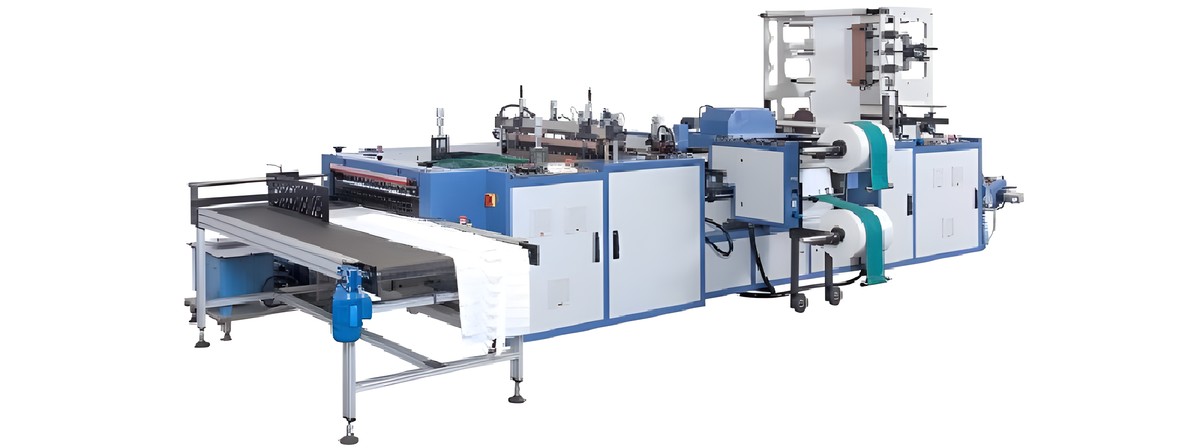
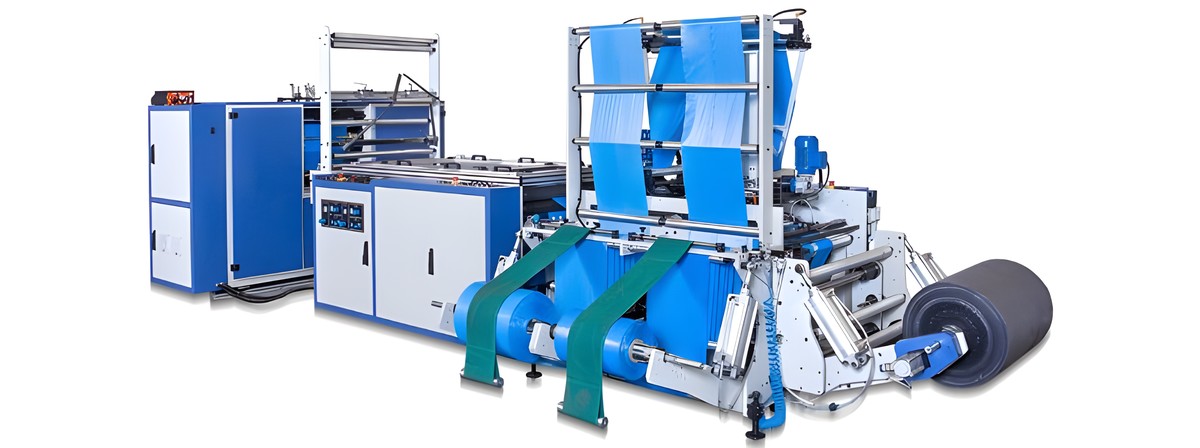
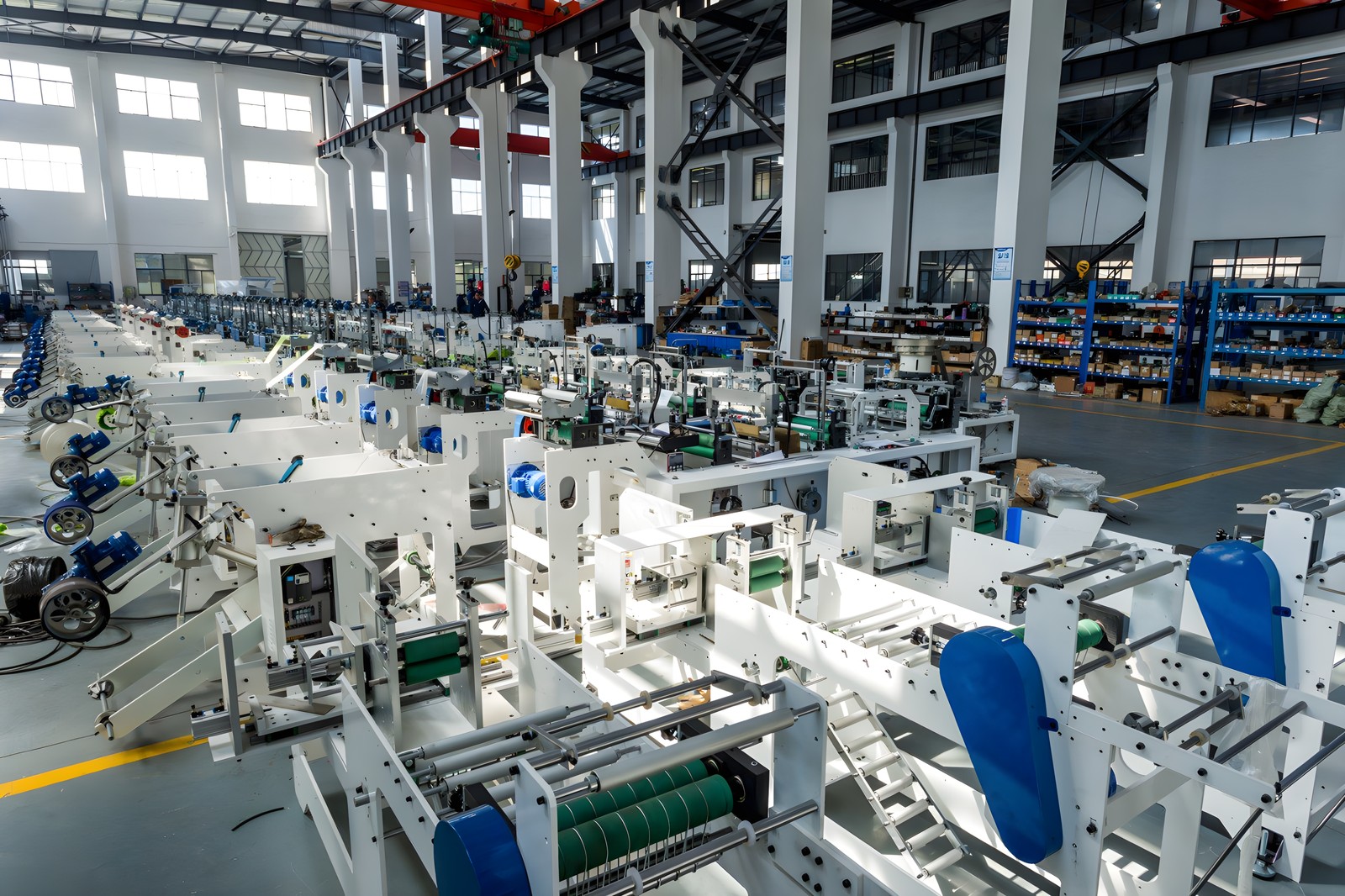
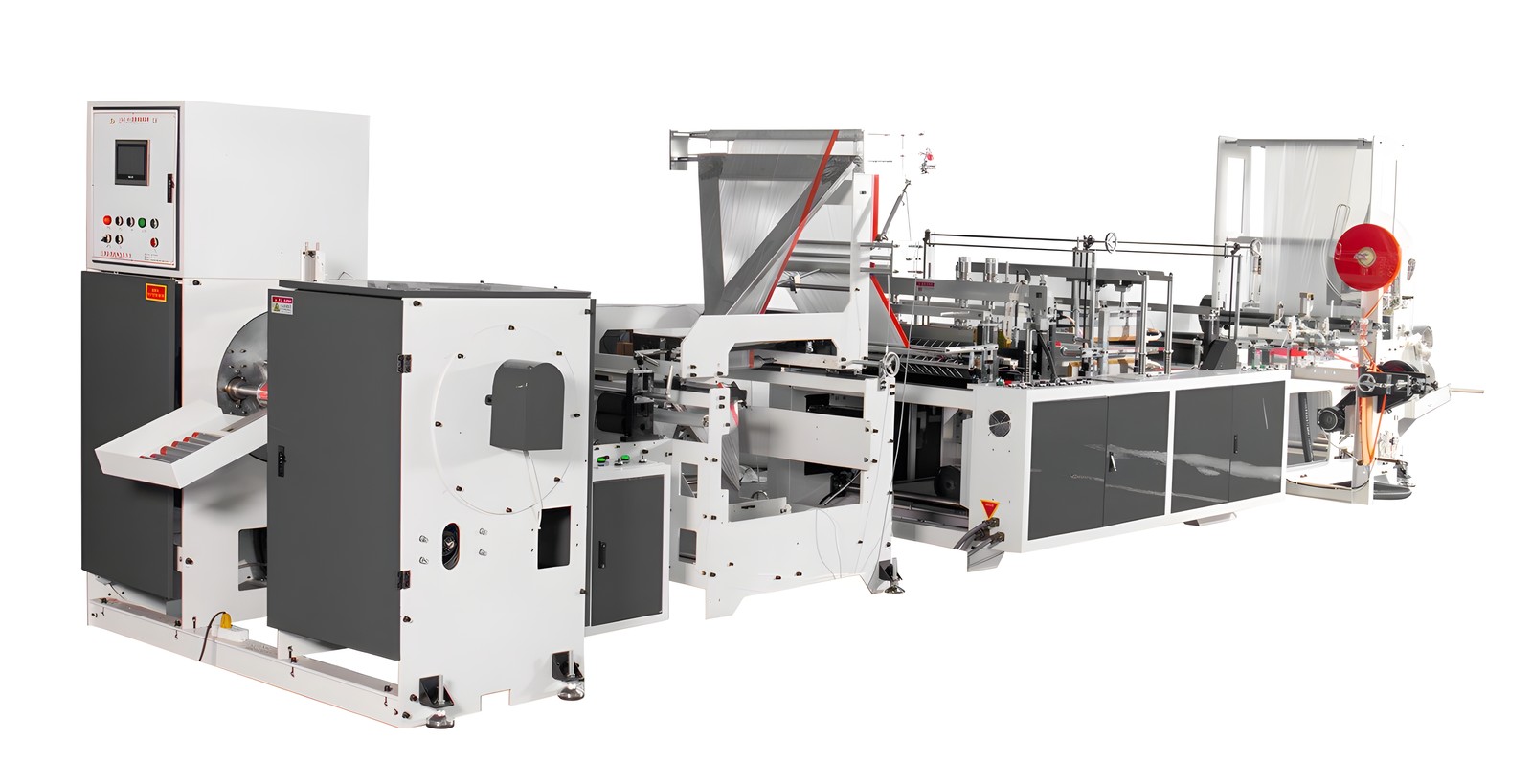
The most interesting trend the whole world is moving toward is Chinese equipment with a fast payback period. We are not talking about “disposable” machines that either never started up or did not deliver even half of the expected speed, but about quality Chinese equipment. About ten plants in China produce drawstring bag machines for bags on a roll; all of them are copies of other equipment — just as in Taiwan and Turkey. But China has learned to do this cheaply and with good quality — though not at all plants.
With a properly drawn-up technical specification, you can get a machine of Taiwanese quality at a price between Chinese and Taiwanese. The speed of such machines depends on the configuration: at decent plants it is 60, 80 or 120 meters per minute. If you take “just China” from platforms like Alibaba, it is good if the machine delivers more than 30 meters per minute — in that case it will not pay for itself.
Our company Plastic Expert places orders for such machines individually: the price comes out half that of Taiwanese machines, and the speed deviation is no more than 20% from the fastest Taiwanese machines.
When choosing equipment, it is important to pay attention to the electronic components and remote access, so that the plant can connect promptly in case of a fault. A spare parts kit should be purchased together with the machine: the plant will tell you which kit is used most often during the year — it must be bought. The number of folds and the overall length of the machine also matter: not every production site has room for just any machine.
Khabibulin I.F., 06.11.2025


